
The short answer
Re-roofing more than half of a roof needs Building Regulations approval in England, and the whole roof then has to be insulated to current standards. A repair to a small area does not. The trigger in Approved Document L is renovating more than 50% of the surface of that roof, or more than 25% of the whole building's external envelope. Approval is also needed whatever the size of the job if the new covering is significantly heavier, if the structure changes, or if the roof's fire performance changes.
You will see "25% of the roof" quoted all over the internet. That figure belongs to the separate whole-building envelope test, and some councils also use it as a cautious rule of thumb. The figure Approved Document L gives for a single roof is 50%. If your council's guidance is stricter, ask them before you start.
What counts as renovating a roof
Approved Document L, paragraph 11.2, defines renovation of a thermal element. For roofs, the two that matter are:
- Stripping the roof back to the structure and rebuilding it: taking off the tiles or slates, battens and felt to expose the rafters, then re-covering.
- Replacing the waterproof membrane on a flat roof.
Paragraph 11.3 then sets the trigger. If more than 50% of the surface of that individual roof is renovated, or the work is a major renovation affecting more than 25% of the building's whole external envelope, the entire roof should be improved to a U-value of at least 0.16 W/m²K. That is the improved value for roofs in Table 4.3.
In plain terms: replace the covering on most of a pitched roof, or replace the membrane on most of a flat roof, and the insulation has to come up to current standards across the whole roof, not just the part you touched.
What if the insulation will not fit?
Paragraph 4.13 allows a lower standard where 0.16 is not technically or functionally feasible, or would not pay back within 15 years. A common example is where insulating to full depth would raise a flat roof above the upstands and door thresholds. In that case the roof should be insulated to the best standard that is feasible. Building control decides what is reasonable, so agree it with them before work starts rather than after.
Other reasons a roof job needs approval
Whatever the size of the job, approval is normally needed if:
- The new covering is significantly heavier. The Planning Portal's guidance gives an increase in weight of 15% or more as the trigger, which is common when concrete tiles replace slate or a lighter tile. The structure has to be checked to carry it.
- The structure is altered: rafters cut or replaced, the roof shape changed, or openings formed for roof windows.
- The fire performance changes, for example a different covering on a roof close to a boundary.
- The work is part of a bigger project, such as a loft conversion or extension, which needs approval anyway.
Patch repairs, replacing a few slipped slates or tiles, re-bedding ridge tiles and fixing flashings are repairs, not renovation, and do not need approval.
How to get approval
There are three routes:
- A roofer registered with a competent person scheme. The NFRC's Competent Roofer scheme lets registered firms self-certify re-roofing work. The firm notifies building control for you and you receive a compliance certificate when the job is done. You make no separate application.
- A building notice or full plans application to your council's building control.
- A registered building control approver, a private-sector alternative to the council.
Whichever route is used, keep the completion or compliance certificate. Your buyer's solicitor will ask for it when you sell. Without one, the sale can be delayed while you apply for retrospective approval, called regularisation.
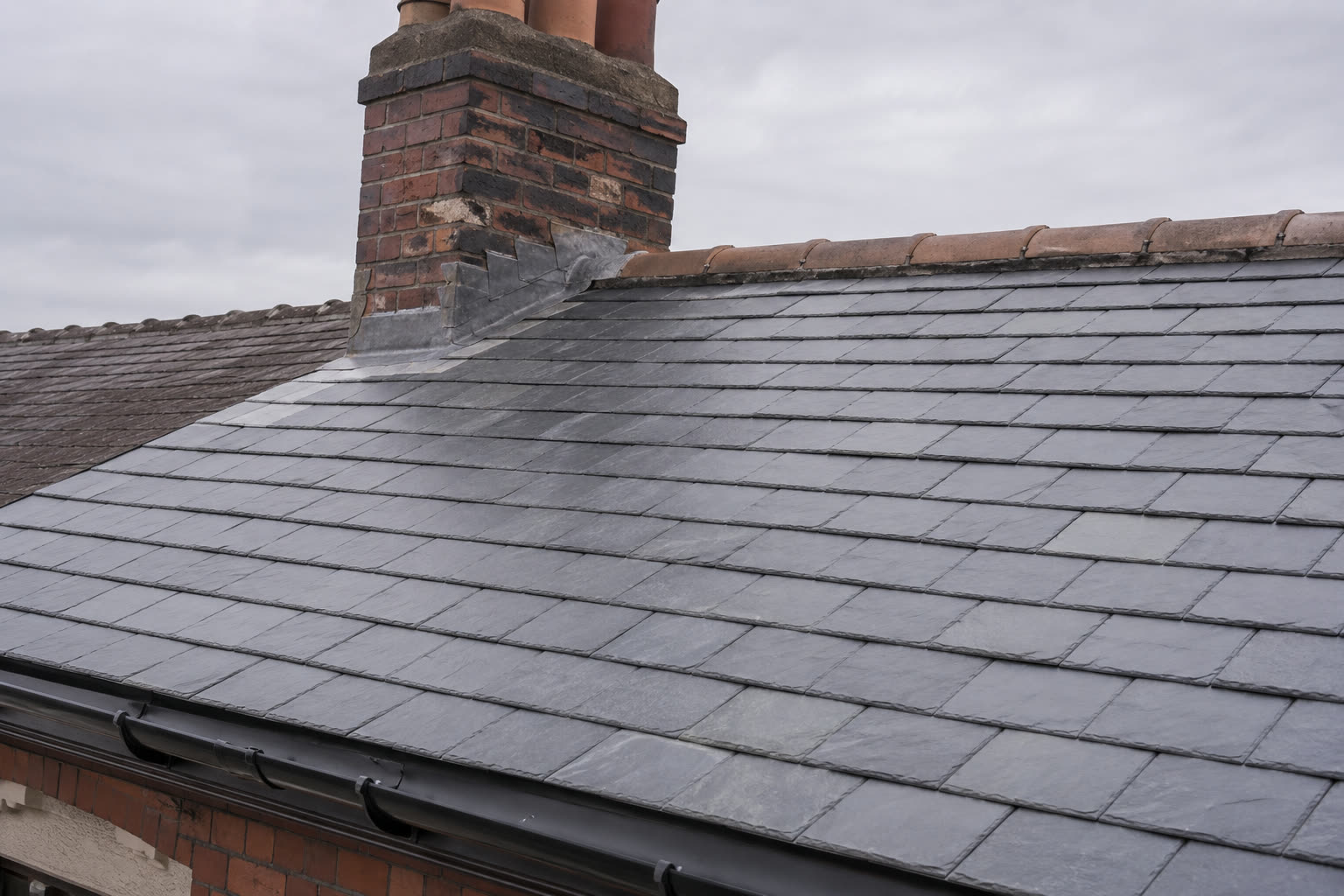
Do you need planning permission to replace a roof?
Usually not, if the new roof looks materially the same. Re-covering a house roof in similar materials is either not development at all or falls within permitted development. Permission or consent can be needed where:
- the building is listed, which needs listed building consent for almost any change to the roof covering;
- the house is in a conservation area or covered by an Article 4 direction that removes permitted development rights for roofs;
- you are changing the shape or height of the roof, adding dormers, or changing materials so the roof looks noticeably different;
- the building is a block of flats or a commercial building, which do not have householder permitted development rights. A like-for-like replacement is still normally not development, because it does not materially affect the building's appearance.
Three other checks before the scaffold goes up
- Bats. Roofs are common bat roosts, and bats and their roosts are protected by law. If there are signs of bats, get advice from an ecologist before starting. If bats are found during the work, stop and take advice.
- Asbestos. Older garages, outbuildings and some roof products contain asbestos cement. Under the Control of Asbestos Regulations 2012 it has to be identified and dealt with properly before it is disturbed.
- Scaffolding on the pavement. Scaffolding on a public highway needs a licence from the council, which your scaffolder normally arranges.
Flat roofs: the case most often missed
Flat roofs catch people out because the work looks small. Stripping and replacing the felt or membrane is renovation under paragraph 11.2. If it covers more than half the roof, the insulation should be upgraded. On a flat roof that usually means a warm deck: insulation boards laid above the deck, under the new membrane, which raises the roof level. Check the height of upstands, door thresholds and window sills at survey stage, before the materials are ordered.
Laying a new membrane over the old one without stripping it is a grey area that building control bodies treat differently. Ask yours before you rely on it.
Common questions
Do I need building regs to replace roof tiles?
Not for replacing a few tiles. Re-covering more than half of a roof, or using a covering significantly heavier than the old one, needs approval, either through a competent person scheme roofer or a building control application.
Does a new flat roof need building regulations?
Replacing the waterproof membrane on more than half of a flat roof is renovation, so it needs approval and the roof should be insulated to the current standard where that is feasible.
What happens if I re-roof without building regs approval?
The council can take enforcement action. The more common problem shows up later, when you sell and cannot produce a completion certificate. You can apply for regularisation, but the inspector may need parts of the roof opened up to check the work.
Do the same rules apply to commercial buildings?
The same principles apply through Approved Document L Volume 2, which covers buildings other than dwellings and uses the same renovation triggers. Commercial roofs also bring fire, access and CDM 2015 duties that a house roof may not.
Sources
- Approved Document L, Volume 1: dwellings, 2021 edition incorporating 2023 amendments, paragraphs 4.13 and 11.2 to 11.3 and Table 4.3 (GOV.UK)
- Planning Portal: roof repairs and re-covering guidance
- Competent Roofer: the NFRC competent person scheme
- Asbestos: the law (HSE)